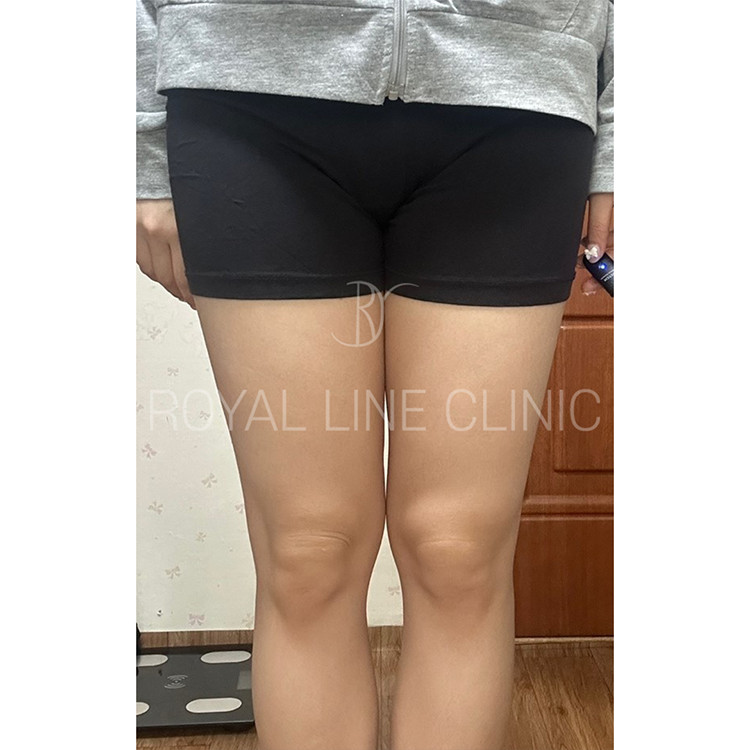
Liposuction in Korea — what the evidence actually says
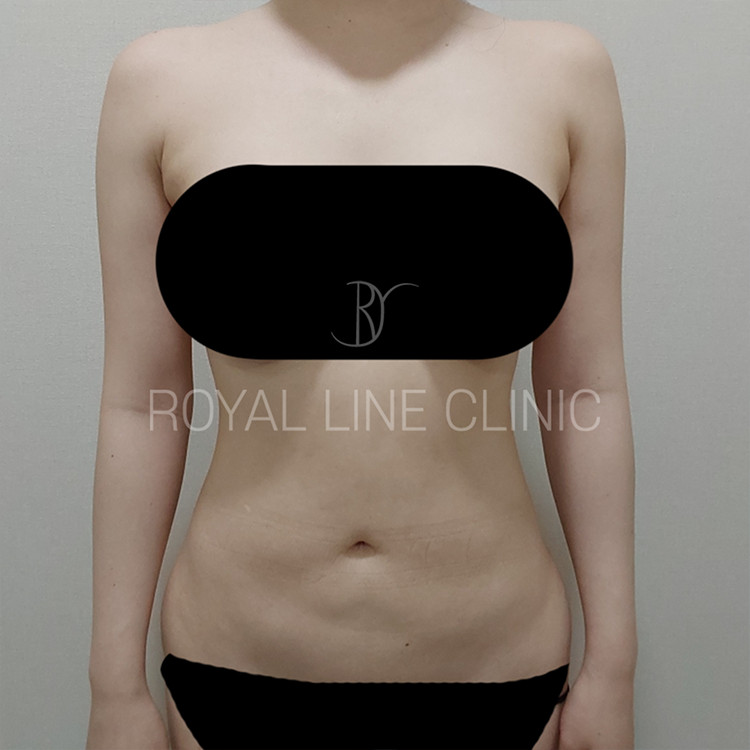
Liposuction reshapes a contour; it does not reduce weight meaningfully. In a 301-case study, average weight change after lower-body liposuction was a loss of about 2.2 lbs (≈1 kg). The same study found fat reduction without redistribution — but with limits worth reading.
If you are searching for liposuction in Korea from abroad, you will find plenty of marketing and very little evidence. This guide does the opposite. It sets out what published studies actually report — including the parts that are less flattering — so you can plan with realistic expectations.
What liposuction does — and does not do
The American Society of Plastic Surgeons describes liposuction as a procedure that slims and reshapes specific areas that do not respond to diet and exercise. It is a contouring procedure, not a treatment for obesity.
The numbers back this up. A prospective study of 301 liposuction and abdominoplasty procedures (Plast Reconstr Surg, 2012) measured body dimensions on standardised photographs before and at least three months after surgery. Liposuction significantly reduced abdominal, thigh, knee and arm width. Average weight change, however, was a loss of only about 2.2 lbs after lower-body liposuction, and about 4.6 lbs when combined with abdominoplasty.
A systematic review of abdominal lipectomy (Obes Surg, 2015) examined the same question — the impact of surgically removing abdominal subcutaneous fat on body weight, BMI and fat mass in women, across ten prospective studies with at least one month of follow-up.
If you are coming to Korea expecting the scale to move, the evidence says you will be disappointed. If you are coming for a line that diet has not changed, that is what this procedure addresses.
Does the fat come back — or move somewhere else?
This is the single most common concern, and there is a reasonable-sounding theory behind it: liposuction removes fat cells, adult fat cell numbers are relatively stable, so surplus energy should accumulate in the remaining cells elsewhere.
The 2012 study tested it directly. The authors noted that, in the absence of rigorous data, some investigators had proposed that fat returns after liposuction. To check for redistribution, they compared upper-body measurements between women who had simultaneous cosmetic breast surgery (n=67) and women who had breast surgery alone (n=78). If fat migrated upward after lower-body liposuction, the first group's upper body should have grown.
The finding is in the paper's title: fat reduction without redistribution.
The limits, stated plainly:
- Participants were predominantly non-obese. The result cannot be assumed for higher BMI ranges.
- Follow-up was at least three months — not several years.
- Photographic measurement captures body dimensions, not precise imaging of fat distribution.
So the accurate statement is: the claim that fat migrates elsewhere is not supported by large-scale measurement — not that you can never gain weight again. Remaining fat cells still enlarge if body weight rises. That is weight gain, not redistribution.
Safety — what large series report
Numbers help here more than reassurance. A series of 9,002 consecutive patients who underwent liposuction under tumescent local anaesthesia between 2003 and 2020 with the same surgical team (Dermatol Surg, 2021) reported no fatal complications and no damage to deeper structures such as nerves, blood vessels, muscles, lungs or abdominal organs, and no lasting lymphoedema. Nineteen mostly minor side effects required closer follow-up or intervention, including seroma (0.04%) and large haematoma (0.03%). An earlier report from the same team covering 4,380 patients (Dermatology, 2011) recorded no complications requiring hospitalisation.
Read these carefully. They are retrospective reports from a single team under specific conditions, not randomised comparisons. They do not say "liposuction is safe" in general; they say "under these conditions, this was the outcome". Risk profiles change with volume, anaesthesia method, patient health and the operating environment — which is why high-volume and full-body liposuction is planned to different standards, and why how you choose a clinic matters more than any single statistic.
Planning a trip — what to settle before booking flights
Coming from abroad adds constraints a local patient does not have. Settle these in writing before you book:
- Who operates. Confirm the surgeon by name, and that the same surgeon performs the procedure. See choosing a liposuction clinic in Korea.
- Total cost and what it includes. Anaesthesia, garments, follow-up, and whether VAT refund applies — set out in cost in Korea & VAT refund.
- Length of stay. Ask when sutures come out, when follow-up happens, and when you may fly home. Do not book a return flight before this is confirmed.
- Which areas, and why. Areas differ in fat, skin elasticity and line goals — see liposuction by body area.
- What happens if something goes wrong after you leave. Ask how follow-up works remotely, and what the clinic's policy is on revision — see revision liposuction.
- Language. Confirm that consent and aftercare instructions are given in a language you read fluently.
Areas, methods and related reading
Once expectations are set, the practical questions are area-specific. Royal Line's approach is the three-step Lot Liposuction® and Royal Triple method, designed area by area rather than by maximum removal.
- Abdomen & flanks — the waist line, designed together
- Thighs — saddlebags and the inner thigh
- Chin & face — double chin and jawline
- Male liposuction & gynecomastia — fatty versus glandular type
- Fat grafting & SVF — when the aspirate is reused
- Buttock fat grafting — where the injection plane governs safety
The Royal Line approach
Royal Line plans around the line, not the volume. Director Kim In-gu, MD checks fat thickness and skin elasticity directly and states the range — and the limits — of what an area can achieve. Where the evidence is not settled, as with several of the questions above, we say so rather than overselling. Results and recovery vary between individuals, and every procedure carries the possibility of side effects.
References
- Photographic measurements in 301 cases of liposuction and abdominoplasty reveal fat reduction without redistribution — Plast Reconstr Surg (2012)
- Short- and Long-Term Effects of Abdominal Lipectomy on Weight and Fat Mass in Females: a Systematic Review — Obes Surg (2015)
- Safety of Tumescent Liposuction Under Local Anesthesia in 9,002 Consecutive Patients — Dermatol Surg (2021)
- Safety of tumescent liposuction under local anesthesia in a series of 4,380 patients — Dermatology (2011)
- American Society of Plastic Surgeons — Liposuction
- Mayo Clinic — Liposuction